
SQUARE FEET: 71,250
CONSTRUCTION COST: $28,000,000 (ESTIMATED)
CATEGORIES: HISTORICAL PRESERVATION
New Mexico Supreme Court Facility Assessment and Schematic Design
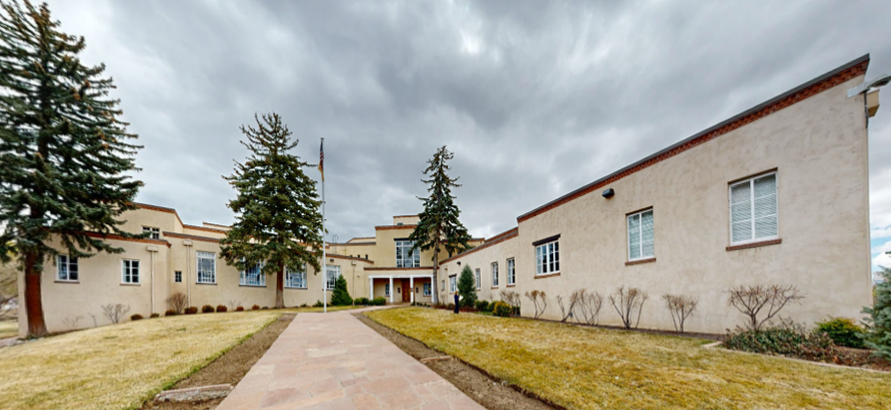
This project included a comprehensive assessment of one of New Mexico’s most important historic state buildings and a programming review of its use. The work also included schematic design of the facility’s Garden Level to improve efficiency and accommodate expanded amenities for employees. The role included the identification of historic features, recommendations for preservation approach, ranking of required repairs, management of all engineering disciplines and cost estimating.
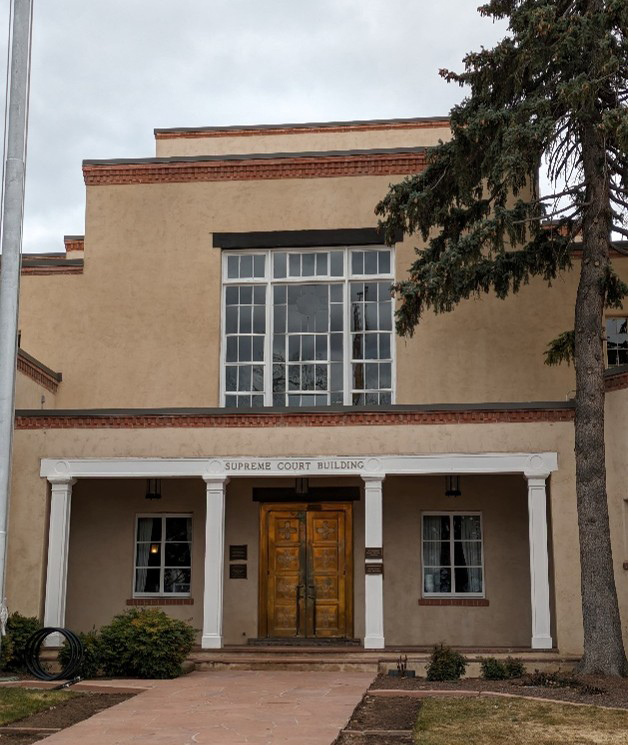
This comprehensive assessment was conducted at the New Mexico Supreme Court building in Santa Fe, New Mexico. This assessment included Facility Conditions and Facility Planning components. The Facility Conditions Assessment encompassed the following key areas:
- Structural Assessment – evaluated the building’s structural integrity, including foundation, framing, and load-bearing capacity.
- Building Envelope Assessment – evaluated the condition of the exterior walls, roof, windows, and doors, focusing on water and air infiltration, thermal performance, and energy efficiency.
- Mechanical and Plumbing Systems Assessment – evaluated the building’s heating, cooling, ventilation, and plumbing equipment.
- Electrical Systems and Technology – evaluated the building’s power, lighting, and technology equipment.
- ADA Accessibility Assessment – evaluated the building’s accessibility features for compliance with the Americans with Disabilities Act (ADA) guidelines.
- Life Safety Assessment – evaluated the building’s compliance with fire safety codes and regulations, including fire alarm systems, fire suppression systems, and emergency egress routes.
The Facility Planning Assessment encompassed the following key areas:
- Space occupancy and use
- Building utilization
- Adjacency and workflow
- Space needs identification
- Alignment of building historic character-defining attributes and future project development guidelines